Sunday, June 17, 2012

Abraham didn't exist? Moses a myth?


Taken from: http://www.crossroad.to/articles2/08/archeology.htm

....


Abraham didn't exist? Moses a myth?
Archeological and historical evidence of Biblical accuracy


By Andy and Berit Kjos


"...always be ready to give a defense to everyone who asks you a reason for the hope that is in you..." 1 Peter 3:15

Dr. N. Glueck


Emphasis added below


"There can be no doubt that archaeology has confirmed the substantial historicity of Old Testament tradition."[1] William F. Albright (1891–1971), one of the world's most respected archaeologists.


"It may be stated categorically that no archaeological discovery has ever controverted a biblical reference." [2] Nelson Glueck, Jewish archaeologist honored even by liberal Time Magazine. (See picture above)


--------------------------------------------------------------------------------


"The Bible's Buried Secrets," a new PBS documentary to be aired November 18, seems designed to undermine the Bible. Not only does it demote Abraham and his descendants to the realm of mythology, it also dismisses the Exodus and denies any written Old Testament record prior to the sixth century B.C.[3]

But we shouldn't be surprised at this unscientific assault on the Bible. As Professor William F. Albright, archeologist and head of Palestine's American School of Oriental Research, observed,


"The excessive skepticism shown toward the Bible by important historical schools... has been progressively discredited. Discovery after discovery has established the accuracy of innumerable details, and has brought increased recognition to the value of the Bible as a source of history."[4]


Archeological evidence that confirms the Bible


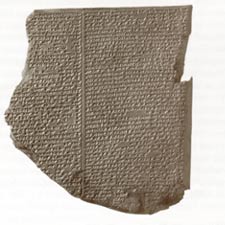
1. Written records from over 4,000 years ago. Dr. Paolo Matthiae, Director of the Italian Archeological Mission in Syria, "hit an archeological jackpot" in 1975. He discovered "the greatest third-millennium [B.C.] archive ever unearthed." It included "more than 15,000 cuneiform tablets and fragments" and unveiled a Semitic empire that dominated the Middle East more than four thousand years ago. Its hub was Ebla, where educated scribes filled ancient libraries with written records of history, people, places and commerce.[5]


"These early tablets display an ease of expression, an elegance that indicates complete mastery of the cuneiform system by the scribes," said Dr. Giovanni Pettinato, former epigraphist of the Italian Mission, who worked closely with Dr. Matthiae. "One can only conclude that writing had been in use at Ebla for a long time before 2500 B.C."


The Ebla tablets verified the worship of pagan gods such as Baal, Dagan and Asherah "known previously only from the Bible."[5] They mention the name "Abraham" and "Ur of Chaldees" (the Biblical Abraham's birthplace) as well as other familiar cities and places:


"The names of cities thought to have been founded much later, such as Beirut and Byblos, leap from the tablets. Damascus and Gaza are mentioned, as well as two of the Biblical cities of the plain, Sodom and Gomorrah. ... Most intriguing of all are the personal names found on the Ebla tablets. They include Ab-ra-mu (Abraham), E-sa-um (Esau)...."[5]


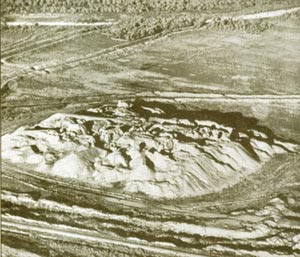
Destroyed and rebuilt several times, Ebla began its final decline around 1800 B.C. Since new generations settled on top of the old ruins, it left behind a many-layered "TEL" (Looks like a flat-topped hill. Capitalized for emphasis) which archeologists will continue to explore for years to come.


Centuries later, Moses was trained "in all the wisdom of the Egyptians" (Acts 7:22). Raised at Pharaoh's court, he would have learned to write on fragile papyrus as well as clay tablets. The 1988 discovery of the TEL el Amarna letters shows us that written messages were an important part of Moses' culture:


"...there were about 400 cuneiform tablets discovered at this site which were part of the royal archives of Amenhotep III and Amenhotep IV (Akhenaten) who reigned about 1400 BC. Among them were letters written in Babylonian cuneiform script to these Pharaohs of Egypt by various kings dwelling in the land of Canaan and Syria... written during the time of Moses [and Joshua]. They provide the first evidence of the Hebrew tribes entering into the land of Canaan in ancient times."[6]


That last sentence points to the completion of the Biblical Exodus -- the Israelite journey, led by Moses, out of bondage in Egypt toward the land God had promised them. Perhaps the "scholars" behind the PBS "documentary" simply chose to ignore the evidence. After all, politically correct deceptions are far more acceptable than facts to a world that no longer tolerates Truth. But that's all the more reason to be ready with answers to those who question our faith. The following archeological finds should help prepare us for the challenges ahead.


2. The Hittite Empire: The Hittites are mentioned dozens of times in the Old Testament. Yet, a century ago,


"critics of Biblical historicity argued that the Bible's descriptions of the Hittite Empire were later insertions, since they were certain the Hittite Empire didn't exist.... But in 1906 archaeologists unearthed the Hittite capital and in the years following excavated what is now known to have been a massive and very prominent Hittite civilization."[7]


3. The royal line of King David: Archeologists have found "the first known reference outside the Bible to the House of David, a ruling dynasty presumably founded by King David in the 10th century B.C." The stone fragment with these revealing inscriptions was found in the ruins of TEL Dan (in northern Israel). One "initial interpretation" is that a victorious king (probably Baasha) was documenting his battle against the king of the "House of David," probably Asa. According to the New York Times, this discovery "is strong independent evidence for the existence and influence of the House of David."[8]


4. Cursive writing "an international means of communication": By the 10th century B.C. writing -- including Aramaic -- had become increasingly common. In spite of social divisions, many were learning to write:


"Though the clerk, the cultured person and the craftsman all used basically the same cursive script, there were decided stylistic differences. These may be classified as sub-styles of cursive and can be termed: (a) extreme cursive—that of the cultured person; (b) formal cursive—that of the professional scribe; and (c) vulgar cursive—that of persons of limited schooling....


"During the ninth and the first half of the eighth centuries, there is no evident distinction between Phoenician and Aramaic script; apparently, the Phoenician-Aramaic lapidary script was used for writing in ink as well.... The beginnings of Aramaic cursive and its rapid development are undoubtedly connected with the rise of the Aramaic language and script as an international means of communication."[9]


5. King Sargon: The prophet Isaiah tells us that "Sargon, the king of Assyria, sent" his commander to fight "against Ashdod," a coastal city in ancient Israel. (Isaiah 20:1). Though Sargon is no household name, this verse fueled a controversy back in the early days of archeology. Some researchers had uncovered a stone obelisk with an engraved list of Assyrian kings. But it didn't include Sargon! So the University of Chicago announced that they saw a "glaring contradiction in the Bible." They were wrong! When Sargon's royal palace was excavated, researchers found his name engraved on numerous bricks in the palace walls -- along with boastful references to his conquest of Ashdod.[10]


6. The Philistine city, Ekron (now called TEL Miqne): This confirmation of Biblical accuracy was published by the Archaeological Institute of America:


"An inscription carved into a limestone slab found at TEL Miqne, 23 miles southwest of Jerusalem, confirms the identification of the site as Ekron, one of the five Philistine capital cities mentioned in the Bible. The inscription is unique because it contains the name of a biblical city and five of its rulers, two of whom are mentioned as kings in texts other than the Bible.... It also strengthens the identification of Ekron with a... city-state recorded in Assyrian texts of the seventh century B.C....


"In 712 B.C. this city was conquered by the Assyrian king Sargon II. For a short time, beginning in 705 B.C., it came under the control of Hezekiah, king of Judah.... In 603 B.C. the city was sacked by the Babylonian king Nebuchadnezzar."[11]


When faced with the overwhelming Assyrian forces, Hezekiah prayed to God for His sovereign intervention. Before the great victory, he encouraged the people:


"Be strong and courageous; do not be afraid nor dismayed before the king of Assyria, nor before all the multitude that is with him; for there are more with us than with him. With him is an arm of flesh; but with us is the Lord our God, to help us and to fight our battles.' And the people were strengthened by the words of Hezekiah king of Judah.” 2 Chronicles 32:7-8


7. The Pool of Bethesda: "...liberal scholars, intent on maintaining their criticism of the Bible, claimed that the Gospel of John could not have been written" by the actual disciple. They argued that verses such as John 6:1 had to be wrong, since it refers to "five porches" at the Jerusalem's pool of Bethesda. But more recent excavations verified John's account:


"...approximately eight years ago archaeologists discovered underneath what they had previously thought was the earliest level at the site of Bethesda an older mikveh (pool) which had a fifth portico transecting it! One would hope that at some point the critics would concede the historical reliability of the biblical narrative."[7]


That's unlikely! Millar Burrows, the renowned Professor of Archaeology at Yale University, explained why:


"The excessive skepticism of many liberal theologians stems not from a careful evaluation of the available data, but from an enormous predisposition against the supernatural."[7]


The accuracy of the Biblical record has been proven again and again. As Dr. Joseph Free wrote, "Archaeology has confirmed countless passages which had been rejected by critics as unhistorical or contrary to known facts."12]


Scientific evidence that supports the Bible


1. Ocean currents (these rivers in the seas -- such as the Gulf Stream that flows across the Atlantic Ocean, bringing the Gulf of Mexico's warm waters to the coast of Norway -- are driven by earth's rotation, gravitation, winds, temperature, saltiness, density variations, etc. See video)


These mighty currents were first discovered by Matthew Maury, a naval officer who was confident that the Bible didn't lie. Disabled by an accident in 1839, Maury left active sea duty and became the superintendent of the US Naval Observatory. As head of the US Depot of Charts and Instruments, he could finally seek answers to a persistent question on his mind: What were "the paths of the seas" mentioned in Psalm 8:8? After studying old ships’ logs,


"he compiled charts of ocean-wind and sea currents. To study the speed and direction of the ocean currents Maury set adrift weighted bottles known as ‘drift bottles’. These floated slightly below the surface of the water, and thus were not affected by wind.... From the location and date on which the bottles were found, Maury was able to develop his charts of the ocean currents — the ‘paths’ of the seas — which greatly aided the science of marine navigation....


"He was elected to the Hall of Fame for Great Americans. A monument erected in his honour... reads: ‘Matthew Fontaine Maury, Pathfinder of the Seas, the genius who first snatched from the oceans and atmosphere the secret of their laws.'"[13]


2. The hydrological cycle: Thousands of years before scientists understood or acknowledged this cycle, it was documented in the Bible. The verses below describe the repeated cycle of precipitation, the flow of water into oceans, its evaporation, and its condensation, which is transported inland in clouds, and driven by currents of winds -- including the now familiar "jet stream," which was unheard of in former times.


"God... draws up drops of water, which distill as rain from the mist, which the clouds drop down and pour abundantly on man. Indeed, can anyone understand the spreading of clouds, the thunder from His canopy?" Job 36:26-29


"The wind goes toward the south, and turns around to the north;

The wind whirls about continually, and comes again on its circuit.

All the rivers run into the sea, yet the sea is not full;

To the place from which the rivers come, there they return again." Ecclesiastes 1:6-7


Historical evidence for Biblical accuracy


Ponder these amazing links between the Biblical account and historical discoveries:


1. Ancient Israel: Before God led His people into their promised land, He warned them through Moses not to follow the corrupt ways of neighboring nations. This brief summary of one such warning could be a wake-up call to Americans as well:


"...when you have eaten and are full, and have built beautiful houses and dwell in them... your heart is lifted up and you forget the Lord your God. ... [Y]ou say in your heart, ‘My power and the might of my hand have gained me this wealth.’ ... [I]f you by any means forget the Lord your God, and follow other gods... you shall surely perish. As the nations which the Lord destroys before you, so you shall perish, because you would not be obedient to the voice of the Lord your God." (Deuteronomy 8:10-20)


Since they didn't listen, they were eventually destroyed -- as the prophets had warned. Most of the people were exiled to Babylon, where many repented, revived the old Scriptures, and were taught God's laws through the teachings of exiled leaders such as Ezekiel.


But others blended their understanding of God with Babylonian myths and conceived a new form of occultism: the Kabbalah. Its history and influence can be traced through mystical branches of rabbinical teachings, secret societies, medieval alchemy, and occult orders such as the Hermetic Order of the Golden Dawn. Most of its branches proclaim an impersonal "God" or "force" -- an enticing counterfeit of the Biblical God.


2. The rise and fall of empires: When Nebuchadnezzar conquered Israel, he brought Daniel to his court. There the faithful prophet interpreted the king's strange dreams and won his respect. One dream in particular was obviously fulfilled:


"...it happened, when I, Daniel, had seen the vision and was seeking the meaning, that suddenly there stood before me one having the appearance of a man.... And he said, '...The ram which you saw, having the two horns—they are the kings of Media and Persia. And the male goat is the kingdom of Greece. The large horn that is between its eyes is the first king. As for the broken horn and the four that stood up in its place, four kingdoms shall arise out of that nation, but not with its power...." (Daniel 8:15-22).


Decades later, Media and Persia conquered and ruled the vast Babylonian empire. They were replaced when the Greek armies of Alexander the Great swept through the Middle East. When Alexander died, his empire was divided among four generals, and its glory soon faded.[14]


3. Dumping Tyre into the sea: The prophet Ezekiel foretold the unique destruction of Tyre -- a coastal center of Mediterranean commerce -- centuries before it was fulfilled:


"...because Tyre has said against Jerusalem, ‘Aha! She is broken who was the gateway of the peoples; now she is turned over to me.... Therefore thus says the Lord God: ‘Behold, I am against you, O Tyre, and will cause many nations to come up against you.... And they shall destroy the walls of Tyre and break down her towers; I will also scrape her dust from her, and make her like the top of a rock. It shall be a place for spreading nets in the midst of the sea.... I will make you a desolate city, like cities that are not inhabited, when I bring the deep upon you, and great waters cover you..." (Ezekiel 26:2-5,19-20)


A city covered by the sea? Impossible!


Not according to history and archeology. The first assaults on this rich maritime city came from Nebuchadnezzar's armies. The city was totally destroyed, but most of its residents escaped to a large island near the coast. Five centuries later (in 332 B.C.), Alexander the Great decided to add this well fortified island city to his Greek empire. When it resisted, the Greek army built a 200 feet wide causeway out to the island -- using the sand and stones from the ruins of the original city to build the passage. They "scraped" Tyre's remnants and cast them into "the midst of the sea."[15]


4. Petra: Years ago, we visited Petra, the "pink city" dramatized in the movie, Indiana Jones and the Last Crusade. The trip to ancient Edom’s capital began in Amman, Jordan, with a four-hour drive south through the desert. Finally, at the mountainous entrance to Petra, the passage once blocked to Moses and his followers, we walked through a narrow gorge. The vertical rock walls on both sides framed a sliver of the "pink palace,” permitting a teasing glimpse of the rose-colored columns and sculptured ornaments of a palatial wall.


But when we reached the once-flourishing city, the stark sunlight exposed the faded facades of a lifeless ghost town. Behind the broken ruins of a lost civilization were empty caves - the stripped tombs of a people who long ago rejected God. The path led no further. The well-traveled old roads were gone -- just as the Bible prophesied:


"... it shall lie waste; No one shall pass through it.... thorns shall come up in its palaces, nettles and brambles in its fortresses.... The wild beasts of the desert shall also meet with the jackals... There the arrow snake shall make her nest..." (Isaiah 34:9-15)


Edom literally dried, wilted, and died. Its streams and vineyards turned to dust -- but not because of chlorofluorocarbons! God did it, because the smug Edomites rejected His ways. But --


"This is what the Sovereign LORD says about Edom... 'The pride of your heart has deceived you, you who live in the clefts of the rocks and make your home on the heights, you who say to yourself, 'Who can bring me down to the ground?' Though you ... make your nest among the stars, from there I will bring you down'” (Obadiah 1, 34)


Unlike the myths and legends of other spiritual traditions, the Bible's meticulous recording of historical events matches both secular history and archeological discoveries. Even the Old Testament droughts (that led to famines and wars) match the migrations, climatic changes, tree rings[16] and other discoveries charted by scholars. God's Word is true. We can count on it!


"All Scripture is given by inspiration of God, and is profitable for doctrine, for reproof, for correction, for instruction in righteousness, that the man of God may be complete, thoroughly equipped for every good work." 2 Timothy 3:16-17


Old Testament prophesies fulfilled by Jesus


1. He would be born of a virgin: “...the Lord Himself will give you a sign: Behold, the virgin shall conceive and bear a Son...." (Isaiah 7:14)

Fulfilled! "Now in the sixth month the angel Gabriel was sent by God to a city of Galilee named Nazareth, to a virgin betrothed to a man whose name was Joseph. ... [T]he angel said to her, 'Do not be afraid, Mary, for you have found favor with God. And behold, you will conceive in your womb and bring forth a Son, and shall call His name Jesus... and of His kingdom there will be no end.'

"Then Mary said to the angel, 'How can this be, since I 'do not know a man?'

"And the angel answered and said to her, 'The Holy Spirit will come upon you, and the power of the Highest will overshadow you; therefore, also, that Holy One who is to be born will be called the Son of God." (Luke 1:26-35)

2. He would be born in Bethlehem: "But you, Bethlehem Ephrathah, though you are little among the thousands of Judah, yet out of you shall come forth to Me the One to be Ruler in Israel, Whose goings forth are from of old, from everlasting.” (Micah 5:2)

Fulfilled! "Joseph also went up from Galilee, out of the city of Nazareth, into Judea, to the city of David, which is called Bethlehem, because he was of the house and lineage of David, to be registered with Mary, his betrothed wife, who was with child.... And she brought forth her firstborn Son..." (Luke 2:4-7)


3. His death would redeem us from sin and judgment: "He was wounded for our transgressions, He was bruised for our iniquities... and the Lord has laid on Him the iniquity of us all. He was oppressed and He was afflicted, yet He opened not His mouth...." (Isaiah 53:5-7)


Fulfilled! "For to this you were called, because Christ also suffered for us, leaving us an example, that you should follow His steps:

'Who committed no sin... who, when He was reviled, did not revile in return; when He suffered, He did not threaten, but committed Himself to Him who judges righteously; who Himself bore our sins in His own body on the tree..." (1 Peter 2:20-25)


4. He was rejected by those He came to save: He is despised and rejected by men.... and we did not esteem Him." (Isaiah 53:3).


Fulfilled! "That was the true Light which gives light to every man coming into the world. He was in the world, and the world was made through Him, and the world did not know Him. He came to His own, and His own did not receive Him. (John 1:9)


5. Identified with our sins, Jesus was separated from our Holy God: "My God, My God, why have You forsaken Me?" (Psalm 22:1).


Fulfilled! "And about the ninth hour Jesus cried out with a loud voice, saying, 'Eli, Eli, lama sabachthani?' that is, 'My God, My God, why have You forsaken Me?'" (Matthew 27:46)


6. He would face mockery from ruling authorities: "All those who see Me ridicule Me; they shoot out the lip, they shake the head, saying, 'He trusted in the Lord, let Him rescue Him; let Him deliver Him...” (Psalm 22:7-8).


Fulfilled! "...the chief priests also, mocking with the scribes and elders, said, 'He saved others; Himself He cannot save. If He is the King of Israel, let Him now come down from the cross, and we will believe Him. He trusted in God; let Him deliver Him....’” (Matthew 27:41-43)


7. Nails would pierce his hands and feet: "They pierced My hands and My feet." (Psalm 22:16)


Fulfilled! When the resurrected Jesus appeared to His disciples, he said, "Why are you troubled? And why do doubts arise in your hearts? Behold My hands and My feet.... Handle Me and see, for a spirit does not have flesh and bones as you see I have.'" (Luke 24:38-39)


"[Eight days later, Jesus appeared to all the disciples] He said to Thomas, 'Reach your finger here, and look at My hands... Do not be unbelieving, but believing.' And Thomas answered and said to Him, 'My Lord and my God!'

Jesus said to him, 'Thomas, because you have seen Me, you have believed. Blessed are those who have not seen and yet have believed.” (John 20:25, 27-29


8. They "cast lots" for his clothes: "They divide My garments among them, and for My clothing they cast lots." (Psalm 22:18)


Fulfilled! "And when they crucified Him, they divided His garments, casting lots for them to determine what every man should take." Mark


9. God's decree and promise after the fall: (speaking to the serpent) "And I will put enmity between you and the woman, and between your seed and her Seed; He shall bruise your head, and you shall bruise His heel.” (Genesis 3:14)


Fulfilled! "And you He made alive, who were dead in trespasses and sins, in which you once walked according to the course of this world, according to the prince of the power of the air, the spirit who now works in the sons of disobedience, among whom also we all once conducted ourselves in the lusts of our flesh, fulfilling the desires of the flesh and of the mind, and were by nature children of wrath....

"But God, who is rich in mercy, because of His great love with which He loved us, even when we were dead in trespasses, made us alive together with Christ.... For by grace you have been saved through faith, and that not of yourselves; it is the gift of God, not of works, lest anyone should boast... (Ephesians 2:1-9)


--------------------------------------------------------------------------------


Proof of the resurrection


"Very early in the morning, on the first day of the week, they came to the tomb.... And they said among themselves, 'Who will roll away the stone from the door of the tomb for us?' 'But when they looked up, they saw that the stone had been rolled away—for it was very large. And entering the tomb, they saw a young man clothed in a long white robe sitting on the right side; and they were alarmed. But he said to them, 'Do not be alarmed. You seek Jesus of Nazareth, who was crucified. He is risen! He is not here." (Mark 16:2-6)


"After that, He appeared in another form to two of them as they walked and went into the country. And they went and told it to the rest, but they did not believe them either. Later He appeared to the eleven...." (Mark 16:12-14)


It's not surprising that many doubt or deny His resurrection. On that glorious event rests the ultimate victory of the gospel! Through the cross, Jesus redeemed us (bore the legal punishment for our sin and freed us from the judgment of the law). Having cleansed us from our sin, He could -- by His resurrection -- raise "us up together" with Himself, so that we could share in His heavenly victory even as we serve Him here on earth." (Ephesians 2:1-10)?


1. The massive stone had been rolled away! This is no small miracle. Weighing over a ton, it could hardly be moved without a lever. Meanwhile, the tomb was both sealed and guarded by a team of Roman soldiers who would face torture and death if they fell asleep or failed to carry out their mission. These guard would eventually be bribed to spread false explanations.


"Mary Magdalene and the other Mary came to see the tomb. And behold, there was a great earthquake; for an angel of the Lord descended from heaven, and came and rolled back the stone from the door, and sat on it. His countenance was like lightning, and his clothing as white as snow. And the guards shook for fear of him, and became like dead men." (Matthew 28:1-4)


"...some of the guard came into the city and reported to the chief priests all the things that had happened. When they had assembled with the elders and consulted together, they gave a large sum of money to the soldiers, saying, 'Tell them, ‘His disciples came at night and stole Him away while we slept.’ And if this comes to the governor’s ears, we will appease him and make you secure.' So they took the money and did as they were instructed...." (Matthew 28:11-15)


2. The tomb was empty -- except for the burial wrappings: If the disciples stole the body, why they bother to uncover it before hiding it. No, the tomb was empty because Jesus had, indeed, risen!


3. More than 500 witnesses could confirm His post-resurrection appearances: As the apostle Paul wrote:


"For I delivered to you as of first importance what I also received, that Christ died for our sins according to the Scriptures, and that He was buried, and that He was raised on the third day according to the Scriptures, and that He appeared to Cephas, then to the twelve. After that He appeared to more than five hundred brethren at one time, most of whom remain until now..." (1 Corinthians 15:3-6)


6. The disciples and others who followed Christ would face persecution and death for proclaiming the resurrection: Before the crucifixion, the disciples were too frightened to even defend their Lord. Their fear didn't diminish after the crucifixion. But after the resurrection, everything changed!


His faithful disciples boldly proclaimed the gospel, the resurrection and the victorious name of Jesus in spite of the threats against them. They faced imprisonment, torture, stoning and death. What changed them? Only an absolute certainty that Jesus, their Lord and King had indeed risen!


"...just as Christ was raised from the dead by the glory of the Father, even so we also should walk in newness of life." (Romans 6:4)


--------------------------------------------------------------------------------


Only One Way


Jesus is the Way - the only way - to life with God today and forever. Yet, millions of seekers are choosing spiritual paths that lead to bondage, disillusionment and despair. Most seek blindly, for they can neither read nor follow God's signposts. They don't see the chasm that separates His Way from all other ways; nor will they seek help from the only One who can bridge that gap.


Our sovereign Lord wrote the blueprint for life, salvation and victory! His Word will stand no matter how many people reject it. They make it abundantly clear that there are no alternative pathways -- no other trails up the mountain -- that can bring us near to God and open the Door into His wonderful eternal Kingdom. Only Jesus Christ, our Lord, can show us the Way:


"I am the door. If anyone enters by Me, he will be saved, and will go in and out and find pasture. The thief does not come except to steal, and to kill, and to destroy. I have come that they may have life, and that they may have it more abundantly." (John 10:9-10)


'I am the way, the truth, and the life. No one comes to the Father except through Me.'" (John 14:6)


If you are truly part of His family, then you know the peace and hope we have in Christ. And nothing is more reassuring than promises such as this:


"Who shall separate us from the love of Christ? Shall tribulation, or distress, or persecution, or famine, or nakedness, or peril, or sword? ... Yet in all these things we are more than conquerors through Him who loved us. For I am persuaded that neither death nor life, nor angels nor principalities nor powers, nor things present nor things to come, nor height nor depth, nor any other created thing, shall be able to separate us from the love of God which is in Christ Jesus our Lord." (Romans 8:31-39)


--------------------------------------------------------------------------------


If you seek to know our God and be part of His family, please see this page: What it means to be a Christian


The following testimonies illustrate how God changes lives and provides all the wisdom and strength we need to joyfully serve Him. We hope they will encourage you: Guilty as Charged
Living in God's forgiveness
My Shepherd


Endnotes:


1. William F. Albright, The Archeology and the Religions of Israel, John Hopkins Press, Baltimore, 1956, p. 176. Cited by Rabbi Glenn Harris, www.gospeloutreach.net/bible.html


2. Nelson Glueck, Rivers in the Desert: History of Negev. Jewish Publication Society of America, Philadelphia, 1969, P. 176. Cited by Rabbi Glenn Harris, www.gospeloutreach.net/bible.html


3. "Holy Moses! PBS documentary suggests Exodus not real" at http://blogs.orlandosentinel.com/entertainment_tv_tvblog/2008/07/bibles-buried-s.html


4. Albright, William Foxwell. The Archaeology of Palestine. Pelican Books, Harmondsworth, Middlesex, England, 1960, p. 127, 128. Cited by Rabbi Glenn Harris, www.gospeloutreach.net/bible.html


5. Howard LaFay, "Ebla: Splendor of an unknown Empire," National Geographic, December 1978, pp. 735. "The people of the ancient Near East erected their cities on strategic sites with plentiful water. As a result, after destruction at the hands of pillaging armies--and to weaker cities this came as often a once a generation-- the population tended to rebuild on the ruins. Excavating a TEL is like slicing a stack of pancakes; each stratum, with its embedded trove of artifacts, encapsulates history from one catastrophe to the next." (735-736, 740, 754)


6. http://www.bible-history.com/archaeology/israel/el-amarna-letters.html


7. www.gospeloutreach.net/bible.html


8. John N. Wilford, "House of David' Inscription: Clues to a Dark Age," New York Times, November 16, 1993. First reported by Dr. Avraham Biran, an archeologist at Hebrew Union College-Jewish Institute of Religion in Jerusalem.


9. The Development of the Aramaic Script (Joseph Naveh’s classic work), http://canterbridge.org/2007/11/18/reviewing-joseph-naveh-the-development-of-the-aramaic-script


10. Sargon king of Assyria at http://www.biblehistory.net/newsletter/sargon.htm


11. Seymour Gitin, Trude Dothan, and Joseph Naveh, "Ekron Identity Confirmed," Archaeology, January/February 1998.


12. Free, Joseph. Archaeology and Bible History. Scripture Press, Wheaton, IL, 1969, pg. 1.


13. Matthew Maury’s search for the secret of the seas at www.answersingenesis.org/creation/v11/i3/maury.asp


14. http://ancienthistory.about.com/cs/persianempir1/a/persiaintro_4.htm


15. http://www.middleeast.com/tyre.htm


16. S. Fred Singer and Dennis T. Avery, Unstoppable Global Warming (Rowman & Littlefield Publishers, 2007), p. 4, 129, 244. Find more specific information at www.reasons.org/resources/fff/new_articles/index.shtml: "...climatologist Kevin Birdwell seeks answers to mysteries of human history via climatological records.... Paleoclimatology—the science dealing with the weather of past ages—often supports or sheds new light on biblical narrative. Birdwell says: 'Analysis of pollen, ice cores, tree rings, coral bands, carbon-14, uranium series dating, and ocean sediment gives us a window to the past. Recent advances in tree ring studies, for example, allow a more precise calibration of carbon-14 records, thus fine tuning dates of some documented events.”


--------------------------------------------------------------------------------


Tuesday, May 15, 2012

What was the sin of Sodom and Gomorrah?


Taken from: http://www.gotquestions.org/Sodom-and-Gomorrah.html


--------------------------------------------------------------------------------


Question: "What was the sin of Sodom and Gomorrah?"


Answer: The biblical account of Sodom and Gomorrah is recorded in Genesis chapters 18-19. Genesis chapter 18 records the Lord and two angels coming to speak with Abraham. The Lord informed Abraham that "the outcry against Sodom and Gomorrah is so great and their sin so grievous." Verses 22-33 record Abraham pleading with the Lord to have mercy on Sodom and Gomorrah because Abraham's nephew, Lot, and his family lived in Sodom.


Genesis chapter 19 records the two angels, disguised as human men, visiting Sodom and Gomorrah. Lot met the angels in the city square and urged them to stay at his house. The angels agreed. The Bible then informs us, "Before they had gone to bed, all the men from every part of the city of Sodom — both young and old — surrounded the house. They called to Lot, 'Where are the men who came to you tonight? Bring them out to us so that we can have sex with them.'" The angels then proceed to blind all the men of Sodom and Gomorrah and urge Lot and his family to flee from the cities to escape the wrath that God was about to deliver. Lot and his family flee the city, and then "the LORD rained down burning sulfur on Sodom and Gomorrah — from the LORD out of the heavens. Thus he overthrew those cities and the entire plain, including all those living in the cities..."


In light of the passage, the most common response to the question "What was the sin of Sodom and Gomorrah?" is that it was homosexuality. That is how the term "sodomy" came to be used to refer to anal sex between two men, whether consensual or forced. Clearly, homosexuality was part of why God destroyed the two cities. The men of Sodom and Gomorrah wanted to perform homosexual gang rape on the two angels (who were disguised as men). At the same time, it is not biblical to say that homosexuality was the exclusive reason why God destroyed Sodom and Gomorrah. The cities of Sodom and Gomorrah were definitely not exclusive in terms of the sins in which they indulged.


Ezekiel 16:49-50 declares, "Now this was the sin of your sister Sodom: She and her daughters were arrogant, overfed and unconcerned; they did not help the poor and needy. They were haughty and did detestable things before me..." The Hebrew word translated "detestable" refers to something that is morally disgusting and is the exact same word used in Leviticus 18:22 that refers to homosexuality as an "abomination." Similarly, Jude 7 declares, "...Sodom and Gomorrah and the surrounding towns gave themselves up to sexual immorality and perversion." So, again, while homosexuality was not the only sin in which the cities of Sodom and Gomorrah indulged, it does appear to be the primary reason for the destruction of the cities.


Those who attempt to explain away the biblical condemnations of homosexuality claim that the sin of Sodom and Gomorrah was inhospitality. The men of Sodom and Gomorrah were certainly being inhospitable. There is probably nothing more inhospitable than homosexual gang rape. But to say God completely destroyed two cities and all their inhabitants for being inhospitable clearly misses the point. While Sodom and Gomorrah were guilty of many other horrendous sins, homosexuality was the reason God poured fiery sulfur on the cities, completely destroying them and all of their inhabitants. To this day, the area where Sodom and Gomorrah were located remains a desolate wasteland. Sodom and Gomorrah serve as a powerful example of how God feels about sin in general, and homosexuality specifically.


Recommended Resource: Coming out of Homosexuality by Bob Davies and 101 Frequently Asked Questions About Homosexuality by Mike Haley.


--------------------------------------------------------------------------------


Related Topics:


What does the Bible say about gay marriage / same sex marriage?


Why was Lot's wife turned into a pillar of salt?


Why did Lot offer up his daughters to be gang raped? Why did God allow Lot's daughters to later have sex with their father?


What does the Bible say about homosexuality? Is homosexuality a sin?


What does the Bible say about bisexuality (bi-sexuality)? Is being a bisexual (bi-sexual) a sin?


--------------------------------------------------------------------------------


Return to:


Questions about Sin


--------------------------------------------------------------------------------


Return to:


GotQuestions.org Home


What was the sin of Sodom and Gomorrah?

Sunday, May 13, 2012

On Jacob's Wrestling With God. Pope Benedict XVI


"He Who Allows Himself to Be Blessed by God ... Renders the World Blessed"


VATICAN CITY, MAY 25, 2011 (Zenit.org).

- Here is a translation of the Italian-language catechesis Benedict XVI gave today during the general audience held in St. Peter's Square. The Pope continued with his new series of catecheses on prayer, reflecting today on prayer in the Patriarch Jacob's life. * * *

Dear Brothers and Sisters, Today I would like to reflect with you upon a text from the Book of Genesis that narrates a rather particular episode in the history of the Patriarch Jacob. It is not an easily interpreted passage, but it is an important one for our life of faith and prayer; it recounts the story of his wrestling with God at the ford of the Jabbok, from which we have just heard a passage. As you will remember, Jacob had taken away his twin brother Esau's birthright in exchange for a dish of lentils and then, through deception, had stolen the blessing of his father Isaac who was already quite advanced in years, by taking advantage of his blindness. Having escaped Esau's fury, he had taken refuge with a relative, Laban; he married and had grown rich and now was returning to the land of his birth, ready to face his brother after having put several prudent measures in place. But when he is all ready for this encounter -- after having made those who were with him cross the ford of the stream marking Esau's territory -- Jacob, now left alone, is suddenly attacked by an unknown figure who wrestles with him for the whole of the night. It is this hand to hand battle which we find in Chapter 32 of the Book of Genesis that becomes for him a singular experience of God. Night is the favorable time for acting in secret, the best time, therefore, for Jacob to enter his brother's territory without being seen, and perhaps with the illusion of taking Esau unawares. But instead, it is he who is surprised by an unexpected attack for which he was not prepared. He had used his cunning to try to save himself from a dangerous situation, he thought he had succeeded in having everything under control, and instead he now finds himself facing a mysterious battle that overtakes him in solitude without giving him the possibility of organizing an adequate defense. Defenseless -- in the night -- the Patriarch Jacob fights with someone. The text does not specify the aggressor's identity; it uses a Hebraic term that generically indicates "a man," "one, someone;" it therefore has a vague, undetermined definition that intentionally keeps the assailant in mystery. It is dark. Jacob is unsuccessful in seeing his opponent distinctly, and also for the reader he remains unknown. Someone is setting himself against the patriarch; this is the only sure fact furnished by the narrator. Only at the end, once the battle has ended and that "someone" has disappeared, only then will Jacob name him and be able to say that he has wrestled with God. The episode unfolds, therefore, in obscurity and it is difficult to perceive not only the identity of Jacob's assailant, but also the battle's progress. Reading the passage, it is hard to establish which of the two contenders succeeds in having the upper hand. The verbs used often lack an explicit subject, and the actions progress in an almost contradictory way, so that when one thinks that either of the two has prevailed, the next action immediately contradicts it and presents the other as the winner. At the beginning, in fact, Jacob seems to be the strongest, and the adversary -- the text states -- "did not prevail against him" (verse 26 [25]); yet he strikes the hollow of his thigh, dislocating it. One would then be led to think that Jacob has to surrender, but instead it's the other who asks him to let him go; and the patriarch refuses, laying down a condition: "I will not let you go, unless you bless me" (verse 27). He who by deception had defrauded his brother of the firstborn's blessing, now demands it from the stranger in whom perhaps he begins to see divine characteristics, but still without being able to truly recognize him. The rival, who seemed to be held and therefore defeated by Jacob, instead of submitting to his request, asks his name: "What is your name?" And the patriarch responds: "Jacob" (verse 28). Here the battle undergoes an important development. To know someone's name, in fact, implies a kind of power over the person, since the name, in biblical thinking, contains the most profound reality of the individual; it unveils his secret and his destiny. Knowing someone's name therefore means knowing the truth of the other, and this allows one to be able to dominate him. When, therefore, at the stranger's request, Jacob reveals his own name, he is handing himself over to his opponent; it is a form of surrender, of the total giving over of himself to the other. But in this act of surrender, Jacob paradoxically also emerges as a winner, because he receives a new name, together with an acknowledgement of victory on the part of his adversary, who says to him: "Your name shall no more be called Jacob, but Israel, for you have striven with God and with men, and have prevailed" (verse 29 [28]). "Jacob" was a name that recalled the patriarch's problematic beginnings; in Hebrew, in fact, it calls to mind the word "heel," and takes the reader back to the moment of Jacob's birth when, coming from the maternal womb, his hand took hold of his twin brother's heel (cf. Gen. 25:26), as though prefiguring the overtaking of his brother's rights in his adult life; but the name Jacob also calls to mind the verb "to deceive, to supplant." Now, in the battle, the patriarch reveals to his opponent, through an act of entrustment and surrender, his own reality as a deceiver, a supplanter; but the other, who is God, transforms this negative reality into something positive: Jacob the deceiver becomes Israel; he is given a new name that signifies a new identity. But also here, the account maintains its intended duplicity, since the most probable meaning of the name Israel is "God is mighty, God triumphs." Jacob therefore prevailed, he triumphed -- it is the adversary himself who affirms it – but his new identity, received by the same adversary, affirms and testifies to God's triumph. When in turn Jacob will ask his contender's name, he will refuse to pronounce it, but he will reveal himself in an unequivocal gesture, by giving him his blessing. That blessing which the patriarch had asked at the beginning of the battle is now granted him. And it is not the blessing grasped by deception, but that given freely by God, which Jacob is able to receive because now he is alone, without protection, without cunning and deception. He gives himself over unarmed; he accepts surrendering himself and confessing the truth about himself. And so, at the end of the battle, having received the blessing, the patriarch is able finally to recognize the other, the God of the blessing: "I have seen God face to face, and yet my life is preserved" (verse 31 [30]), and now he can cross the ford, the bearer of a new name but "conquered" by God and marked forever, limping from the wound he received. The explanations that biblical exegesis can give regarding this passage are numerous; in particular, the learned recognize in it intentions and literary components of various kinds, as well as references to a few popular stories. But when these elements are taken up by the sacred authors and included in the biblical account, they change in meaning and the text opens itself up to broader dimensions. The episode of the wrestling at the Jabbok is offered to the believer as a paradigmatic text in which the people of Israel speak of their own origins and trace out the features of a particular relationship between God and man. For this reason, as the Catechism of the Catholic Church also affirms: "the spiritual tradition of the Church has retained the symbol of prayer as a battle of faith and as the triumph of perseverance" (No. 2573). The biblical text speaks to us of the long night of the search for God, of the battle to know his name and to see his face; it is the night of prayer that, with tenacity and perseverance, asks a blessing and a new name from God, a new reality as the fruit of conversion and of forgiveness. In this way, Jacob's night at the ford of the Jabbok becomes for the believer a point of reference for understanding his relationship with God, which in prayer finds its ultimate expression. Prayer requires trust, closeness, in a symbolic "hand to hand" not with a God who is an adversary and enemy, but with a blessing Lord who remains always mysterious, who appears unattainable. For this reason the sacred author uses the symbol of battle, which implies strength of soul, perseverance, tenacity in reaching what we desire. And if the object of one's desire is a relationship with God, his blessing and his love, then the battle cannot but culminate in the gift of oneself to God, in the recognition of one's own weakness, which triumphs precisely when we reach the point of surrendering ourselves into the merciful hands of God. Dear brothers and sisters, our whole life is like this long night of battle and prayer that is meant to end in the desire and request for God's blessing, which cannot be grasped or won by counting on our own strength, but must be received from him with humility, as a gratuitous gift that allows us, in the end, to recognize the face of the Lord. And when this happens, our whole reality changes; we receive a new name and the blessing of God. But even more: Jacob, who receives a new name, who becomes Israel, also gives a new name to the place where he wrestled with God; he prayed there and renamed it Peniel, which means "the Face of God." With this name, he recognized that place as filled with God's presence; he renders the land sacred by imprinting upon it the memory of that mysterious encounter with God. He who allows himself to be blessed by God, who abandons himself to him, who allows himself to be transformed by him, renders the world blessed. May the Lord help us to fight the good fight of faith (cf. Timothy 6:12; 2 Timothy 4:7) and to ask his blessing in our prayer, so that he may renew in us the anticipation of seeing his face. Thank you. [Translation by Diane Montagna] [The Holy Father then greeted pilgrims in several languages. In English, he said:] Dear Brothers and Sisters, In our catechesis on Christian prayer, we now turn to the biblical account of the Patriarch Jacob's struggle with God at the ford of the Jabbok (cf. Gen 32:23-33). This mysterious encounter takes place at night, when Jacob is alone and unarmed; the identity of his assailant and the winner of the contest is not at first clear. Jacob is wounded and must reveal his name to his rival, suggesting his defeat, yet he receives a new name 'Israel' and is given a blessing. At daybreak Jacob recognizes that his opponent is God; limping from his wound, he now crosses the ford. The Church's spiritual tradition has seen in this story a symbol of prayer as a faith-filled struggle which takes place at times in darkness, calls for perseverance, and is crowned by interior renewal and God's blessing. This struggle demands our unremitting effort, yet ends by surrender to God's mercy and gift. At daybreak, Jacob called the place of his struggle Peniel, which means "face of God", for he said: "I have seen God face to face, and yet my life is preserved" (Gen 32:30).

In our prayers, let us ask the Lord to help us as we fight the good fight of faith, and to bless us as we long to see his face. I offer a warm welcome to all the English-speaking pilgrims present at today's Audience, especially those from England, Ireland, Denmark, Norway, Nigeria, Australia, India, Indonesia, Japan and the United States. In a special way I welcome the group of Wounded Warriors, with the promise of my solidarity in prayer. I also greet the many student groups present, and I thank the choirs for their praise of God in song. Upon all of you I invoke the joy and peace of the Risen Lord.

....

Taken from: http://www.zenit.org/article-32676?l=english


Thursday, May 10, 2012

Clearing Up Some Misconceptions Re Early Genesis


From a reader ....


Dear Damien,

Thank you for taking the time to share with [us] your notes on the 19th dynasty! We really appreciate it.

Your approach and ours will yield different results, particularly with regard to stratigraphy because we start with some differing assumptions (presuppositions) that drive us to different answers.

From reading your materials, I gather the following starting assumptions:

A. The earth is millions of years old, and the Creation of Mankind or Creation Week, followed long epochs of geological history of life on Earth (dinosaurs and such).

B. The Deluge of Genesis was a local event in Mesopotamia, which laid down the "flood deposits" in Ur and elsewhere.

C. "Eden" was in the Levant and archaeology in the Levant begins with the cities built by the Predeluvial generations.

D. The Babel Culture is therefore likely to be found after said flood deposits.

Our quite different assumptions are as follows:

1. The entire geological column was deposited in recorded history (since the creation of Adam) and 99% of the sedimentary strata on Earth were deposited by the global cataclysm called "the Deluge".

2. The face of the pre-deluvial world was completely destroyed and re-arranged. The 8 survivors renamed the major geographical features after the places of their old home - thus we have Tigris and Euphrates, but the four rivers originating from one location is not to be found. Some predeluvial cities may be buried under sedimentary rock in certain locations around the world. However, there is no indication that the Garden of Eden was located in what is now the "Middle East". For all we know it could be buried under the Pacific, or could have been completely pulverized.

3. The entirety of archaeological deposits in the Levant were made by people who lived after the Deluge, the Babel culture will be the layer at the very bottom of the oldest sites - which in most cases has not been excavated due to high water table. The sites of the age of Babel will be very few, probably less than 20.

4. Genesis has internal evidence that alphabetic writing existing before the Deluge and the toledoth tablets were written in alphabetic script.

5. The invention of Middle Eastern pictographic writing (from which came cuneiform, hieroglyphics & hansi) was probably an immediate adaptation to the confusion of languages at Babel in 2192 BC. Pictures could be understood by everyone, even if alphabetic words could not. ( I realize that the oldest post-flood alphabets found are based on pictographs of animals/objects that start with said letter in proto-semitic and this was probably the original pre-Flood writing system. After the confusion of tongues, those who were literate would remember that writing was pictures, and having lost the ability to read the alphabetic script, would make up a new pictographs that was initially language neutral. Though later, they evolved into specialized scripts in each civilization's culture area. Hence Thoth [Heth close relative of Osiris (Nimrod)] was the re-inventor of writing in recorded history.)

6. The discovery of the original sites of any of the 6/8 cities mentioned in Genesis 10 would allow a precise calibration of archaeological dating methods, particularly Rehydroxylation dating, which measures the rate of rehydration of ceramic and brick.

Because of our different presuppositions, we will probably arrive at substantially different interpretations of archaeological finds.

Damien, we have greatly enjoyed your writings and learned a great deal from you. We may not always agree. But we hold you in highest respect.

Kyrie Eleison,
....


Damien Mackey's Reply


Dear ....


You have read me completely wrong on matters relating to early Genesis, as have others. See e.g.: http://genesis1.blog.com/2010/10/20/robert-sungenis-adventures-in-blogland-or-wonderland/
 
I have never once claimed, nor do I personally believe, that: “The earth is millions of years old …”.

Nor have I ever claimed that: “… the Creation of Mankind or Creation Week, followed long epochs of geological history of life on Earth (dinosaurs and such)”. See my article, “Book of Origins”, at the same site: http://genesis1.blog.com/2008/04/21/book-of-origins/

Nor do I believe that: “The Deluge of Genesis was merely a local event in Mesopotamia, which laid down the "flood deposits" in Ur and elsewhere”. My Flood model extended way beyond Mesopotamia, e.g. to Egypt and Ethiopia. See my article, “Just How ‘Global’ Was the Great Flood?”: http://genesisflood.blog.com/2008/04/07/just-how-global-was-the-great-flood/

As to your own research, I suspect that you may be doing methodologically, at least in part, what the theoretical scientists do, conceiving an elaborate a priori mathematicised model and then forcing that model on the data, whether biblical, historical or scientific. Force the real data to fit the artificial model – and then declare that this is how things are. For a wonderful study of this type of methodology, see Gavin Ardley’s Aquinas and Kant: http://brightmorningstar.blog.com/2008/10/21/gavin-ardleys-book-aquinas-and-kant/

That is probably why you are reluctant to include archaeology (stratigraphy) in the mix, as it will not yield to allowing a long separation of Egypt’s 19th dynasty from its 18th dynasty, as according to your Velikovskian (in this case) based model.

My best regards

Damien Mackey.

Tuesday, April 17, 2012

Pentecost Reversed Babel


Psalm 2


Why this tumult among nations,


among peoples this useless murmuring?


They arise, the kings of the earth,


princes plot against the Lord and his Anointed.


"Come, let us break their fetters,


come, let us cast off their yoke."


He who sits in the heavens laughs,


the Lord is laughing them to scorn.


Then he will speak in his anger,


his rage will strike them with terror.


"It is I who have set up my king


on Zion, my holy mountain."


I will announce the decree of the Lord.


The Lord said to me, "You are my Son.


It is I who have begotten you this day.


Ask and I shall bequeath you the nations,


put the ends of the earth in your possession.


With a rod of iron you will break them,


shatter them like a potter's jar."


Now, O kings, understand,


take warning, rulers of the earth;


serve the Lord with awe and trembling,


pay him your homage


lest he be angry and you perish;


for suddenly his anger will blaze.


Blessed are they who put their trust in God.


Glory be to the Father, and to the Son, and to the Holy Spirit;


as it was in the beginning, is now, and will be for ever. Amen


This is the day the Lord has made;


let us rejoice and be glad, alleluia.


[Pause and reflect on the previous psalm.]


ANT: Christ has risen from the dead and will never die again, alleluia.


And, taken from: http://www.truthinlove.com/References/babel_and_pentecost.html


CONTRASTING PENTECOST AND BABEL


At Pentecost, God did the reverse of what he did at the tower of Babel.


At Pentecost, God poured out his Spirit. At Babel, the people did not have the Spirit of God.


The people of Babel tried to make a name for themselves. They were not trying to do God's will or glorify his name. The consequence of this was that God cursed them by confusing their language. They could not co-operate with each other and so they were scattered.


If our language or terminology is confused, then we will not be able to understand each other. We will not be able to achieve anything, let alone build God's city. The result of confusion is division.


God did the opposite of this at Pentecost. People were able to understand each other again and co-operate to build God's city/dwelling place/temple (ie the church).


If we are going to build God's dwelling place today, then we need to understand and co-operate with one another. To do this, we need to have a common Biblical terminology.


THE TOWER OF BABEL


Genesis 11:1-9


From these the nations spread out over the earth after the flood.


Now the whole world had one language and a common speech.


As men moved eastward, they found a plain in Shinar and settled there.


They said to each other, "Come, let's make bricks and bake them thoroughly." They used brick instead of stone, and tar for mortar.


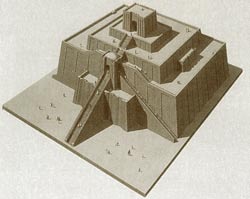
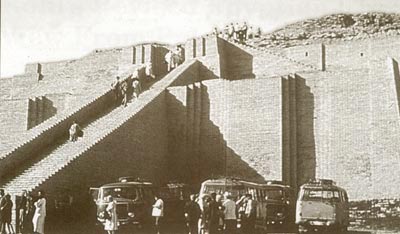
Then they said, "Come, let us build ourselves a city, with a tower that reaches to the heavens, so that we may make a name for ourselves and not be scattered over the face of the whole earth."


But the LORD came down to see the city and the tower that the men were building.


The LORD said, "If as one people speaking the same language they have begun to do this, then nothing they plan to do will be impossible for them.


Come, let us go down and confuse their language so they will not understand each other."


So the LORD scattered them from there over all the earth, and they stopped building the city.


That is why it was called Babel --because there the LORD confused the language of the whole world. From there the LORD scattered them over the face of the whole earth.


PENTECOST


It is prophesied in Joel that in the last days, God would pour out His Spirit on ALL PEOPLES - not just Jews.


This began to happen at Pentecost commencing with the Jews in Jerusalem and rapidly spreading to the Gentiles in the Surrounding Nations.


From that time on, all men and women from every Language, Tribe and Nation would have access to God by one Spirit, though faith in Jesus Christ, The Son of God.


Jesus had previously commissioned the disciples to preach the Gospel starting in Jerusalem, then Samaria and finally to the ends of the Earth.


Salvation would be available to all who believe the Gospel: First for the Jew, then for the Gentile.


It was no coincidence that Jesus was Crucified during the Passover Feast. It was at this very time that He chose to go up to Jerusalem; knowing what would happen.


Jews from every nation were in Jerusalem to celebrate the Passover - A feast to commemorate the time when God spared the lives of all whose houses were covered by the blood of a Lamb - It was held on the 14 day of the first month of the Jewish calendar - Nissan (April).


On the day Jesus rose from the grave, Jesus appeared to the disciples and told them not to leave Jerusalem until they had received the gift of the Holy Spirit (50 days later).


Pentecost was the day that our Lord chose to empower the believers with the Holy Spirit.


The Feast of Pentecost was to commemorate the giving of the Law. It was held on the 6th day of the third month - Sivan (June). It was precisely 50 days after the Passover.


On the Day of Pentecost, the Believers numbered a hundred and twenty. They were gathered together. All of them were Jews or converts to Judaism. (There were no Gentile Believers present at that point).


When God poured out his Spirit at Pentecost, people were baptized and filled with the Spirit. They were so overflowing with joy that people thought they were drunk.


The Spirit enabled them to speak in other tongues so they could understand each other in their own native language.


Other signs of Baptism in the Spirit included praising God and prophesying.


They had a common faith and a Godly vision.


The Church grew rapidly even though they spoke different languages.


Philip took the Gospel to the Samaritans (who were half Jew and half Gentile) but they could not receive the Spirit until Peter and John went down from Jerusalem to confirm that the Gospel was not just for Jews.


Subsequently, God Poured out his Spirit on the Gentiles starting with Cornelius' House, much to the surprise of the circumcised believers. They were Baptized in the Spirit simply by hearing the message, before the disciples even had a chance to lay hands on them or Baptize them in water!


Prior to this it had been against the Jewish Law to associate with a Gentile, but now, the Gentiles had the Spirit of God too!


Paul was miraculously converted and chosen by God to 'carry' His Name to the Gentiles and to the people of Israel.


The Church started with just 120 people....


Acts 2:1-21


When the day of Pentecost came, they were all together in one place.


Suddenly a sound like the blowing of a violent wind came from heaven and filled the whole house where they were sitting.


They saw what seemed to be tongues of fire that separated and came to rest on each of them.


All of them were filled with the Holy Spirit and began to speak in other tongues as the Spirit enabled them.


Now there were staying in Jerusalem God-fearing Jews from every nation under heaven.


When they heard this sound, a crowd came together in bewilderment, because each one heard them speaking in his own language.


Utterly amazed, they asked: "Are not all these men who are speaking Galileans?


Then how is it that each of us hears them in his own native language?


Parthians, Medes and Elamites; residents of Mesopotamia, Judea and Cappadocia, Pontus and Asia,


Phrygia and Pamphylia, Egypt and the parts of Libya near Cyrene; visitors from Rome


(both Jews and converts to Judaism); Cretans and Arabs--we hear them declaring the wonders of God in our own tongues!"


Amazed and perplexed, they asked one another, "What does this mean?"


Some, however, made fun of them and said, "They have had too much wine."


Then Peter stood up with the Eleven, raised his voice and addressed the crowd: "Fellow Jews and all of you who live in Jerusalem, let me explain this to you; listen carefully to what I say.


These men are not drunk, as you suppose. It's only nine in the morning!


No, this is what was spoken by the prophet Joel:


"'In the last days, God says, I will pour out my Spirit on all people. Your sons and daughters will prophesy, your young men will see visions, your old men will dream dreams.


Even on my servants, both men and women, I will pour out my Spirit in those days, and they will prophesy.


I will show wonders in the heaven above and signs on the earth below, blood and fire and billows of smoke.


The sun will be turned to darkness and the moon to blood before the coming of the great and glorious day of the Lord.


And everyone who calls on the name of the Lord will be saved.'


Tuesday, March 27, 2012

The Wives of the Sons of Jacob


Judah was the first of the sons of Jacob to enter wedlock. After the sale of Joseph to the Midianites, his brethren had said to Judah, "If conditions were as before, our father would provide wives for us now. As it is, he is entirely absorbed by his grief for Joseph, and we must look about for wives ourselves. Thou art our chief, and thou shouldst marry first."

Judah's marriage with Alit the daughter of the noble merchant Shua, which was consummated at Adullam, the residence of his friend Hirah, or, as he was called later, Hiram, king of Tyre, was not happy. His two oldest sons died, and shortly thereafter his wife also. It was Judah's punishment for having begun a good deed and left it unfinished, for "he who begins a good deed, and does not execute it to the end, brings down misfortune upon his own head." Judah had rescued Joseph from death, but it was his suggestion to sell him into slavery. Had he urged them to restore the lad to his father, his brethren would have obeyed his words. He was lacking in constancy to persist until he had completed the work of Joseph's deliverance, which he had begun.

In the same year, the year of Joseph's misfortune, all his other brethren married, too. Reuben's wife was named Elyoram, the daughter of the Canaanite Uzzi of Timnah. Simon married his sister Dinah first, and then a second wife. When Simon and Levi massacred the men of Shechem, Dinah refused to leave the city and follow her brethren, saying, "Whither shall I carry my shame?" But Simon swore he would marry her, as he did later, and when she died in Egypt, he took her body to the Holy Land and buried it there. Dinah bore her brother a son,96 and from her union with Shechem, the son of Hamor, sprang a daughter, Asenath by name, afterward the wife of Joseph. When this daughter was born to Dinah, her brethren, the sons of Jacob, wanted to kill her, that the finger of men might not point at the fruit of sin in their father's house. But Jacob took a piece of tin, inscribed the Holy Name upon it, and bound it about the neck of the girl, and he put her under a thornbush, and abandoned her there. An angel carried the babe down to Egypt, where Potiphar adopted her as his child, for his wife was barren. Years thereafter, when Joseph travelled through the land as viceroy, the maidens threw gifts at him, to make him turn his eyes in their direction and give them the opportunity of gazing upon his beauty. Asenath possessed nothing that would do as a present, therefore she took off the amulet suspended from her neck, and gave it to him. Thus Joseph became acquainted with her lineage, and he married her, seeing that she was not an Egyptian, but one connected with the house of Jacob through her mother.97

Beside the son of Dinah, Simon had another son, whose name was Saul, by Bunah, the damsel he had taken captive in the campaign against Shechem.

Levi and Issachar married two daughters of Jobab, the grandson of Eber; the wife of the former was named Adinah, the wife of the latter, Aridah. Dan's wife was Elflalet, a daughter of the Moabite Hamudan. For a long time their marriage remained childless, finally they had a son, whom they called Hushim. Gad and Naphtali married women from Haran, two sisters, daughters of Amoram, a grandson of Nahor. Naphtali's wife, Merimit, was the older of the two, and the younger, the wife of Gad, was named Uzit.

Asher's first wife was Adon, the daughter of Ephlal, a grandson of Ishmael. She died childless, and he married a second wife, Hadorah, a daughter of Abimael, the grandson of Shem. She had been married before, her first husband having been Malchiel, also a grandson of Shem, and the issue of this first marriage was a daughter, Serah by name. When Asher brought his wife to Canaan, the three year old orphan Serah came with them. She was raised in the house of Jacob, and she walked in the way of pious children, and God gave her beauty, wisdom, and sagacity.

Zebulon's wife was Maroshah, the daughter of Molad, a grandson of Midian, the son of Abraham by Keturah.

For Benjamin, when he was but ten years old, Jacob took Mahlia to wife, the daughter of Aram, the grandson of Terah, and she bore him five sons. At the age of eighteen he married a second wife, Arbat, the daughter of Zimran, a son of Abraham by Keturah, and by her also he had five sons.


Copyright © 2001-2012 Globusz® Publishing. All rights reserved.


....


Tuesday, March 20, 2012

How Can the Chinese Dynasties Extend Back Many Thousands of Years?

Chinese Flood Character, Nukua


by John D. Morris, Ph.D.


"For the invisible things of him from the creation of the world are clearly seen, being understood by the things that are made, even his eternal power and Godhead; so that they are without excuse" (Romans 1:20)


I was lecturing on the Biblical and scientific evidence for recent creation to a university audience in Hong Kong, China, when a scholar raised the objection: "The Chinese have a documented history going back many thousands of years, much earlier than your dates for creation and the Flood. We have known dynasties and named rulers. The Bible must be wrong."


The solution lies in an examination of the earliest Chinese dynasties. Actually, precisely documented dynasties go back only to about 2000 B.C. The first true dynasty was founded about 4000 years ago by a leader remembered for having "sweetened the waters," making the land habitable after wide-spread flooding. The ten listed dynasties before that, however, were of a different sort, with very long lives and questionable details attributed to them. From a Biblical viewpoint, as did all of humanity, the Chinese descended from Adam, then Noah through the Tower of Babel incident. The amazing "Table of Nations" in Genesis 10, which chronicles the language groups and their destinations, mentions the "Sinite people" in verse 17, which probably became the Asian groups.The Asian people descended from language groups migrating away from the Tower of Babel after God confounded their languages. In all likelihood, the well-documented dynasties date to that event, while the prior ones were faded memories of pre-Flood patriarchs, preserved as legends.


Doesn't this "Back to Genesis" history have the ring of truth about it? Biblical chronologies place the Babel incident at 4200 or so years ago. Many of the expelled groups took with them technological knowledge which they put to use in their new homelands. History documents the fact that several major cultures sprang into existence seemingly from nowhere at about the same time—the Egyptians, the Sumerians, the Phoenicians, the Indians, as well as the Chinese—and each possessed a curious mixture of truth and pagan thought, as would be expected from peoples only briefly separated from Noah and his teachings as well as the star worshipping/pyramid building heresy of Nimrod at Babel.


Interestingly, each group mentioned above lists 10 patriarchs in their pre-history, just as does Genesis. Individual leaders would guide their growing language groups to a new land, bringing both technology and a history with them. Each had personal knowledge of the Flood and pre-Flood days, having learned from Noah, his sons, or their early descendants. The Asian leader evidently gained prominence when he engineered the draining of swampy land left saturated by leftover flood waters. His following dynasty commenced about the time of Abraham, about 2000 B.C., and the memories of long-lived patriarchs of pre-Flood days became early dynasties.


Details in ancient history are necessarily scarce, and proposed origins must be considered tentative. But the fact is, Biblical history is correct. All peoples descended from Adam, then Noah through the Tower of Babel incident. We shouldn't be surprised when we find cultural and historical memories of the "Back to Genesis" truth.


....

Taken from: http://www.icr.org/article/how-can-chinese-dynasties-extend-back-many-thousan/

Sunday, January 22, 2012

Sodom Found?


Tell el Hammam


Damien F. Mackey

Bible believers who might lack a proper perspective with regard to how biblical characters and events sit in relation to archaeological levels and geographical locations can sometimes latch on to the report of a new archaeological discovery believed to confirm the Bible, when in fact it doesn’t have any bearing whatsoever on what it purports to uphold. That is exactly the case with a recent situation regarding SODOM as pointed out to me by a reader, who had wondered if the reported finding of the destroyed city of Sodom et al., Tell-el-Hammam, 14 km NE of the Dead Sea (http://www.thesacredpage.com/2011/12/sodom-and-gomorrah-excavated.html), might be worth our playing close attention to.


IT IS NOT! And that is precisely what I told the reader.


It was sufficient - for me to feel compelled to reject the site’s validity for Sodom - merely to read that this site showing destruction (and ‘a heat event’ has even been proposed as the cause of this destruction, thereby seeming to add more weight to the Sodom factor) was a Late Bronze Age site. The Late Bronze Era was way too late for Abram (as he was called at the time of the destruction of Sodom), who became Abraham; and this, despite the report’s claim that: “The site fits the geographical and temporal context into which Sodom and Gomorrah are placed in the biblical texts”. It fits neither (geographically nor temporally).


I now intend to provide readers with a simple biblical-archaeological correlation (as asked for by another reader), which will clearly show where Abram sits in relation to the Late Bronze Age. We are going to learn that he was nowhere near it.


For me, the fundamental starting point for any Old Testament-related archaeology is the identification of the nomadic Middle Bronze I people (before the Late Bronze Age, note) with the Israelites of the Exodus and the Joshuan Conquest. I was once asked by what was formerly Answers in Genesis [AIG] to assess an archaeologically-based biblical reconstruction article that had been submitted to AIG for publication. I was highly critical of it on this very basis, that it had missed out on the all-important correlation of the Middle Bronze I people with the Israelites. Apparently the article was not published by AIG – and I then felt sorry for the author who had put so much research and effort into writing it.


Plenty has now been written on this correlation of the Middle Bronze I with the nomadic Israelites, but the most authoritative piece, by far, is the famous article by Dr. Rudolph Cohen - known as “the King of the South” for his archaeological expertise in the southern desert regions of Israel: The Mysterious MBI People, Rudolph Cohen, BAR 9:04, Jul/Aug 1983.


Dr. Cohen had tentatively proposed in this article that the Middle Bronze I people were the Israelites of the Exodus. He had to be tentative, because his conclusion was right out of line with conventional archaeology, according to which the Middle Bronze Era approximated rather to the time of Abram (i.e., for those who believe in Abram), about half a millennium before Moses and Joshua. In fact many have proposed, based on the conventional system, that the migration of Abram might have been part of the movement of the nomadic Middle Bronze people.


Dr. Cohen was far less tentative, though, when speaking personally to the Australian antiquities enthusiast Dr. David Down of “Archaeological Diggings”, who reported that he had been told by Dr. Cohen straight out: “The Middle Bronze I people were the Israelites”. And I believe that Dr. Down has also written that other Israeli archaeologists in the south concur with this view. Whilst those in the north do not.


Anyway Dr. John Osgood, writing for the old Ex Nihilo journal (which became the AIG Technical Journal, and is now the Journal of Creation), has shown beyond any reasonable doubt, using maps, that the Middle Bronze I people - who carried with them Egyptian artefacts, incidentally - settled in the exact same regions (Kadesh-barnea; Paran desert; Transjordania; into Palestine) as those recorded in the Pentateuch, and the Books of Joshua and Judges, for the wandering Israelites. It is recommended that one consult the article itself, for the important maps: http://creation.com/the-times-of-the-judges-the-archaeology-exodus-to-conquest


I guess we could say as a very rough approximation that the Middle Bronze I period sits about halfway in the archaeological series, the latter overlapping the Stone Ages. Abram comes well before Middle Bronze, and the Late Bronze Age comes after it. This shows up the ridiculousness of any attempt to locate the destroyed city of Sodom, during the time of Abram, at any Late Bronze Age site.


The accepted sequence - which is basically always linear with the textbook scholars, but is not in reality - goes like this:


- Geological Ages (of no interest here)


- Stone Ages (Palaeolothic; Mesolithic; Neolithic; Chalcolithic)


- Archaeological Ages (Early Bronze Age; Middle Bronze Age; Late Bronze Age; Iron Age)


In actuality, the Stone Ages are not entirely linear, but can be shown to overlap amongst themselves. Also, Egypt’s sequence: Old Kingdom (Early Bronze); First Intermediate Period; Middle Kingdom (Middle Bronze); Second Intermediate Period; needs to be reduced to just the one kingdom followed by the one intermediate period (Dr. Donovan Courville showed this in The Exodus Problem and its Ramifications, Loma Linda, CA 1971), meaning that the Early and Middle Bronze phases must overlap. (And King Hammurabi of Babylon does not work at all as a Middle Bronze Age ruler, where convention has placed him, but only as a Late Bronze Age ruler).


{The Archaeological Ages and the dynastic kingdoms will ultimately need to be re-defined and re-named}.


Now here is the biblically-related sequence, the revised version, which I have discussed in detail in other articles:


Abram (c. 2000 BC). Late Chalcolithic to (early) Early Bronze Age I (= beginning of major cities, such as Jerusalem, Jericho);


Moses (c. 1500 BC). Early Bronze Age III to Middle Bronze I.


Israelites (c. 1500 BC). Middle Bronze I.


King David (c. 1000 BC). Late Bronze I.


King Solomon (c. 950 BC). Late Bronze I to II.


Shishak King of Egypt. Late Bronze II.


Jeroboam I (c. 900 BC). Iron Age I. Etc.


The conventional arrangement has thrown completely out of whack the biblico-historical alignment. Thus we get the fêted Israeli archaeologist, Israel Finkelstein of Tel Aviv University, poking around in a miserable phase of the Iron Age for kings David and Solomon, and then declaring: “Now Solomon. I think I destroyed Solomon, so to speak. Sorry for that!” (National Geographic article, “Kings of Controversy” by Robert Draper, December 2010, p. 85):


Dr. John Osgood, once again, has managed to anchor Abram and the time of the four invading Mesopotamian kings of Genesis 14 to the Late Chalcolithic period, in relation to En-geddi; this period corresponding approximately to Dynasty 0 (late pre-dynastic) in Egyptian history.


First published: Journal of Creation 2:77–87 April 1986 The Times of Abraham


By Dr A.J.M. Osgood. http://creation.com/the-times-of-abraham


One can see from the above simple outline that (a) Late Chalcolithic Abram was a very long way from the Late Bronze Age; and that (b) to locate Abram in the Late Bronze Age, as according to the Sodom article, would leave very little archaeology (mainly just Iron Ages) for the long remaining biblical history of Israel after Abram.


-----------------------------------------------------------------------------

The reader who asked for the simple biblico-archaeological correlation suggested that I add to the above: “It might be useful to tell people that the Chalcolithic Age is sometimes called the Copper Age”. And: “Another thought about the (NON) lineal aspect of these 'Ages' is to point out that 'civilizations' go through these stages at different periods. Thus, Melanesians of New Guinea, or Aboriginals of Australia were only recently in a 'Stone' Age and many Amerindian nations had not advanced to an 'Iron' Age when contact was made with Europeans”.

-----------------------------------------------------------------------------

Thursday, December 29, 2011

Gilgamesh was Nimrod According to Livingston


Homepage         Articles


Who Was Nimrod?


by Dr. David Livingston


"Cush was the father of Nimrod, who grew to be a mighty warrior on the earth. He was a might hunter before the LORD; that is why it is said, "Like Nimrod, a mighty hunter before the LORD. " The centers of his kingdom were Babylon, Erech, Akkad and Calneh in Shinar. (Genesis 10:8-10) Many consider this to be a positive, complimentary testimony about Nimrod. It is just the opposite! First, a little background study is necessary.

Cultural Connections in the Ancient Near East

Gilgamesh
Found at Khorsabad, this eighth century BC stone relief is identified as Gilgamesh. The best-known of ancient Mesopotamian heroes, Gilgamesh was king of Uruk in southern Mesopotamia. His story is known in the poetic Gilgamesh Epic, but there is no historical evidence for his exploits in the story. He is described as part god and part man, a great builder and warrior, and a wise man in the story. Not mentioned in the Bible, the author suggests Gilgamesh is to be identified with Biblical Nimrod in Genesis 10:8-12.
Besides the stories of the Creation and Flood in the Bible, there ought to be similar stories on clay tablets found in the cultures near and around the true believers. These tablets may have a reaction, or twisted version, in their accounts of the Creation and Flood. In the post-Flood genealogical records of Genesis 10, we note that the sons of Ham were: Cush, Mizraim, Put and Canaan. Mizraim became the Egyptians. No one is sure where Put went to live. And it is obvious who the Canaanites were. Cush lived in the "land of Shinar," which most scholars consider to be Sumer. There they developed the first civilization after the Flood. The sons of Shem -- the Semites -- were also mixed, to some extent, with the Sumerians.
We suggest that Sumerian Kish, the first city established in Mesopotamia after the Flood, took its name from the man known in the Bible as Cush. The first kingdom established after the Flood was Kish, and the name "Kish" appears often on clay tablets. The early post-Flood Sumerian king lists (not found in the Bible) say that "kingship descended from heaven to Kish" after the Flood. (The Hebrew name "Cush" was much later moved to present-day Ethiopia as migrations took place from Mesopotamia to other places.)
The Sumerians, very early, developed a religio-politico state which was extremely binding on all who lived in it (except for the rulers, who were a law unto themselves). This system was to influence the Ancient Near East for over 3000 years. Other cultures which followed the Sumerian system were Accad, Babylon, Assyria, and Persia, which became the basis of Greece and Rome's system of rule. Founded by Cush, the Sumerians were very important historically and Biblically.

Was "Nimrod" Godly or Evil?

Ancient Babylon
Nimrod started his kingdom at Babylon (Genesis 10:10). Babylon later reached its zenith under Nebuchadnezzar (sixth century BC). Pictured are mudbrick ruins of Nebuchadnezzar's city along with ancient wall lines and canals.
First, what does the name Nimrod mean? It comes from the Hebrew verb marad, meaning "rebel." Adding an "n" before the "m" it becomes an infinitive construct, "Nimrod." (see Kautzsch 1910: 137 2b; also BDB 1962: 597). The meaning then is "The Rebel." Thus "Nimrod" may not be the character's name at all. It is more likely a derisive term of a type, a representative, of a system that is epitomized in rebellion against the Creator, the one true God. Rebellion began soon after the Flood as civilizations were restored. At that time this person became very prominent.
In Genesis 10:8-11 we learn that "Nimrod" established a kingdom. Therefore, one would expect to find also, in the literature of the ancient Near East, a person who was a type, or example, for other people to follow. And there was. It is a well-known tale, common in Sumerian literature, of a man who fits the description. In addition to the Sumerians, the Babylonians wrote about this person; the Assyrians likewise; and the Hittites. Even in Palestine, tablets have been found with this man's name on them. He was obviously the most popular hero in the Ancient Near East.
Sennacherib's Palace
Part of Nimrod's kingdom (Genesis 10:11), Nineveh along the Tigris River continued to be a major city in ancient Assyria. Today adjacent to modern Mosul, the ruins of ancient Nineveh are centered on two mounds, the acropolis at Kuyunjik and Nebi Yunis (Arabic "Prophet Jonah"). Pictured is Sennacherib's "Palace without a rival" on Kuyunjik, constructed at the end of the seventh century BC and excavated by Henry Layard in the early 20th century.

The Gilgamesh Epic

Gilgamesh Epic, one of 11 tablets
The Babylonian Flood Story is told on the 11th tablet of the Gilgamesh Epic, almost 200 lines of poetry on 12 clay tablets inscribed in cuneiform script. A number of different versions of the Gilgamesh Epic have been found around the ancient Near East, most dating to the seventh century BC. The most complete version came from the library of Ashurbanipal at Nineveh. Commentators agree that the story comes from a much earlier period, not too long after the Flood as described in the story.
The person we are referring to, found in extra-Biblical literature, was Gilgamesh. The first clay tablets naming him were found among the ruins of the temple library of the god Nabu (Biblical Nebo) and the palace library of Ashurbanipal in Nineveh. Many others have been found since in a number of excavations. The author of the best treatise on the Gilgamesh Epic says,
The date of the composition of the Gilgamesh Epic can therefore be fixed at about 2000 BC. But the material contained on these tablets is undoubtedly much older, as we can infer from the mere fact that the epic consists of numerous originally independent episodes, which, of course, did not spring into existence at the time of the composition of our poem but must have been current long before they were compiled and woven together to form our epic (Heidel 1963: 15).
Yet his arrogance, ruthlessness and depravity were a subject of grave concern for the citizens of Uruk (his kingdom). They complained to the great god Anu, and Anu instructed the goddess Aruru to create another wild ox, a double of Gilgamesh, who would challenge him and distract his mind from the warrior's daughter and the noblemen's spouse, whom it appears he would not leave in peace (Roux 1966: 114).
The Epic of Gilgamesh has some very indecent sections. Alexander Heidel, first translator of the epic, had the decency to translate the vilest parts into Latin. Spieser, however, gave it to us "straight" ( Pritchard 1955: 72). With this kind of literature in the palace, who needs pornography? Gilgamesh was a vile, filthy, man. Yet the myth says of him that he was "2/3 god and 1/3 man."

Gilgamesh is Nimrod

ancient ziggurat


Model of ancient ziggurat.
How does Gilgamesh compare with "Nimrod?" Josephus says of Nimrod,
Now it was Nimrod who excited them to such an affront and contempt of God. He was the grandson of Ham, the son of Noah -- a bold man, and of great strength of hand. He persuaded them not to ascribe it to God, as if it were through his means they were happy, but to believe that it was their own courage which procured that happiness. He also gradually changed the government into tyranny -- seeing no other way of turning men from the fear of God, but to bring them into a constant dependence upon his own power. He also said he would be revenged on God, if he should have a mind to drown the world again; for that he would build a tower too high for the waters to be able to reach! and that he would avenge himself on God for destroying their forefathers (Ant. 1: iv: 2)
What Josephus says here is precisely what is found in the Gilgamesh epics. Gilgamesh set up tyranny, he opposed YHVH and did his utmost to get people to forsake Him.
Two of the premiere commentators on the Bible in Hebrew has this to say about Genesis 10:9,
Nimrod was mighty in hunting, and that in opposition to YHVH; not "before YHVH" in the sense of according to the will and purpose of YHVH, still less, . . . in a simply superlative sense . . . The name itself, "Nimrod" from marad, "we will revolt," points to some violent resistance to God . . . Nimrod as a mighty hunter founded a powerful kingdom; and the founding of this kingdom is shown by the verb with vav consecutive, to have been the consequence or result of his strength in hunting, so that hunting was intimately connected with the establishing of the kingdom. Hence, if the expression "a mighty hunter" relates primarily to hunting in the literal sense, we must add to the literal meaning the figurative signification of a "hunter of men" (a trapper of men by stratagem and force); Nimrod the hunter became a tyrant, a powerful hunter of men (Keil and Delitzsch 1975: 165).
"in the face of YHVH can only mean "in defiance of YHVH," as Josephus and the Targums understand it (op. cit.: 166).
And the proverb must have arisen when other daring and rebellious men followed in Nimrod's footsteps and must have originated with those who saw in such conduct an act of rebellion against the God of salvation, in other words, with the possessors of the divine promise of grace (loc. cit.).
Ziggurat at ancient Ur
Often attributed to Nimrod, the Tower of Babel (Genesis 11:1-9) was not a Jack and the Beanstalk type of construction, where people were trying to build a structure to get into heaven. Instead, it is best understood as an ancient ziggurat (Assyrian "mountaintop"), as the one pictured here from ancient Ur of the Chaldees, Abraham's hometown (Genesis 11:31). A ziggurat was a man-made structure with a temple at its top, built to worship the host of heaven.
After the Flood there was, at some point, a breakaway from YHVH. Only eight people descended from the Ark. Those people worshipped YHVH. But at some point an influential person became opposed to YHVH and gathered others to his side. I suggest that Nimrod is the one who did it. Cain had done similarly before the Flood, founding a new city and religious system.
Our English translation of the Hebrew of Genesis 10:8-10 is weak. The author of this passage of Scripture will not call Gilgamesh by his name and honor him, but is going to call him by a derisive name, what he really is -- a rebel. Therefore we should translate Genesis 10:8-10 to read,
Cush begat Nimrod; he began to be a tyrant in the earth. He was a tyrannical hunter in opposition to the Lord. Thus it is said, "Nimrod the tyrannical opponent of YHVH."
Likewise, Gilgamesh was a man who took control by his own strength. In Genesis 10 Nimrod is presented as a type of him. Nimrod's descendants were the ones who began building the tower in Babel where the tongues were changed. Gilgamesh is a type of early city founders. (Page numbers below are from Heidel 1963)
He is a "shepherd" .................. page 18
From Uruk ............................. page 17  (Kramer 1959: 31 calls Uruk, Erech.)
A giant ................................... page 17  (11 cubits)
Builds cities ............................ page 17
Vile man "takes women" ......... page 18
Mighty hunter ......................... page 18

Gilgamesh Confronts YHVH!

The name of YHVH rarely appears in extra-Biblical literature in the Ancient Near East. Therefore we would not expect to find it in the Gilgamesh epic. But why should the God of the Jews rarely be mentioned? The Hebrew Bible is replete with the names of other gods.
On the other hand, the nations surely knew of Him even though they had no respect for Him. If so, how might His Name appear in their literature, if at all? The name of YHVH, in a culture which is in rebellion against His rule, would most likely be in a derisive form, not in its true form. Likewise, the writers of Scripture would deride the rebels.

Putting the Bible and the Gilgamesh Epic Together

The Gilgamesh Epic describes the first "God is Dead" movement. In the Epic, the hero is a vile, filthy, perverted person, yet he is presented as the greatest, strongest, hero that ever lived. (Heidel 1963: 18). So that the one who sent the Flood will not trouble them anymore, Gilgamesh sets out to kill the perpetrator. He takes with him a friend who is a monstrous half-man, half-animal -- Enkidu. Together they go on a long journey to the Cedar Mountain to find and destroy the monster who sent the Flood. Gilgamesh finds him and finally succeeds in cutting off the head of the creature whose name is "Huwawa" ("Humbaba" in the Assyrian version; see Heidel 1963: 34ff).
Is there a connection with the Gilgamesh epic and Genesis 10? Note what Gilgamesh says to Enkidu, the half-man, half-beast, who accompanied him on his journey, found in Tablet 111, lines 147 - 150.
"If I fall," Gilgamesh says, "I will establish a name for myself. 'Gilgamesh is fallen,' they will say, 'in combat with terrible Huwawa.'"
But the next five lines are missing from all tablets found so far! Can we speculate on what they say? Let's try . . . We suggest that those five lines include,
"But if I win,.. they will say, Gilgamesh, the mighty vanquisher of Huwawa!"
Why do we say that? Because Genesis 10:9 gives us the portion missing from the Gilgamesh tablets. Those lines include... "it is said, Nimrod (or Gilgamesh) the mighty vanquisher of YHVH." This has to be what is missing from all the clay tablets of the Gilgamesh story. The Gilgamesh Epic calls him Huwawa; the Bible calls Him YHVH.
The face of Huwawa, photo by Thorkild  Jacobsen
This face supposedly represents Huwawa who, according to the Gilgamesh's Epic, sent the Flood on the earth. According to the story, Huwawa (Humbaba in the Assyrian version) was killed by Gilgamesh and his half-man/half-beast friend, Enkidu. The author suggests Huwawa is the ancient pagan perspective of Yahweh (YHVH), the God of the Bible. About 3 inches (7.5 cm), this mask is dated to around the sixth century BC. Of an unknown provenance, it is now in the British Museum.
Heidel, speaking of the incident as it is found on Tablet V says,
All we can conclude from them (the lost lines) is that Gilgarnesh and Enkidu cut off the head of Humbaba (or Huwawa) and that the expedition had a successful issue (ending) (1963: 47).
The missing lines from the Epic are right there in the Bible!
Because of the parallels between Gilgamesh and Nimrod, many scholars agree that Gilgamesh is Nimrod. Continuing with Gilgamesh's fable, he did win, he did vanquish Huwawa and took his head. Therefore he could come back to Uruk and other cities and tell the people "not to worry about YHVH anymore, he is dead. I killed him over in the Lebanon mountains. So just live however you like, I will be your king and take care of you."
There are still other parallels between the Bible and the Gilgamesh epic: "YaHVeH" has a somewhat similar sound to "Huwawa." Gilgamesh did just as the "sons of god" in Genesis 6 did. The "sons of god" forcibly took men's wives. The Epic says that is precisely what Gilgamesh did. The Bible calls Nimrod a tyrant, and Gilgamesh was a tyrant. There was a Flood in the Bible, there is a flood in the Epic. Cush is mentioned in the Bible, Kish in the Epic. Erech is mentioned in Scripture, Uruk was Gilgamesh's city. Gilgamesh made a trip to see the survivor of the Flood. This was more likely Ham than Noah, since "Nimrod" was Ham's grandson! Historically, Gilgamesh was of the first dynasty of Uruk. As Jacobsen points out (1939: 157), kings before Gilgamesh may be fictional, but not likely. The fact that the Gilgamesh Epic also contains the Deluge story would indicate a close link with events immediately following the Flood. S.N. Kramer says,
A few years ago one would have strongly doubted his (historical) existence . . . we now have the certitude that the time of Gilgamesh corresponds to the earliest period of Mesopotamian history. (Kramer 1959: 117)
Palace at Nimrud in Iraq
Originally established by Nimrod (Genesis 10:11), and today known as Nimrud, Calah became an important city in Iraq. This is an artist's reconstruction of the interior of Tiglath-pileser III's palace (late seventh century BC).
What a contrast Psalm 2 is compared with the Gilgamesh Epic!
Why do the nations conspire and the peoples plot in vain? The kings of the earth take their stand and the rulers gather together against the LORD and against his Anointed One. "Let us break their chains," they say, "and throw off their fetters." The One enthroned in heaven laughs, the Lord scoffs at them. Then he rebukes them in his anger and terrifies them in his wrath, saying, "I have installed my King on Zion, my holy hill." I will proclaim the decree of the LORD: He said to me, "you are my Son, today I have become your Father, Ask of me, and I will make the nations your inheritance, the ends of the earth your possession. You will rule them with an iron scepter; you will dash them to pieces like pottery." Therefore, you kings, be wise; he warned, you rulers of the earth. Serve the LORD with fear and rejoice with trembling. Kiss the Son, lest he be angry and you be destroyed in your way, for his wrath can flare up in a moment. Blessed are all who take refuge in him.   (Psalm 2)

Bibliography

Brown, F., Driver, S.R., and Briggs, C.A.(abbreviated to BDB)
1962 A Hebrew and English Lexicon of the Old Testament. Oxford: Clarendon Press.
Cassuto, U.
1964 A Commentary on the Book of Genesis. 2 Vols., Jerusalem: Magnes.
Frankfort, R.
1948 Kingship and the Gods. Chicago: University Press.
Heidel, A.
1963 The Gilgamesh Epic and Old Testament Parallels. Chicago: University Press.
Jacobsen, T.
1939 The Sumerian Kinglist. Chicago: University Press.
Josephus
1998 Jewish Antiquities. Books I-III, Loeb Classics, Cambridge MA: Harvard University Press.
Kautzsch, E., ed.
1910 Genesius' Hebrew Grammar. Oxford: Clarendon.
Kramer, S. N., ed.
1959 History Begins at Sumer. Garden City NY: Doubleday.
Keil, C. F., and Delitzsch, P.
1975 Commentary on the Old Testament., Vol. I, Grand Rapids: Eerdmans.
Pritchard, J.
1969 Ancient Near Eastern Texts and the Old Testament. 3rd ed., Princeton: University Press.
Roux, G.
1992 Ancient Iraq. 3rd ed., Harmondsworth, Middlesex, UK: Penguin.
Thomas, D.W.
1958 Documents From Old Testament Times. New York: Thomas Nelson and Sons.

Tuesday, December 13, 2011

The Justification of Abraham


Taken from:

http://harvardmagazine.com/2004/01/the-evolution-of-abraham.html


The Evolution of Abraham


We first meet Abraham in Genesis 11. Abraham, a descendant of Noah through his son Shem, lived with his family in the city of Ur in Chaldea (today’s Iraq). Having left Ur with his father, Terah, his wife, Sarah, and his nephew, Lot, Abraham stayed for a time in Haran, where Terah died. But the story begins in earnest in Genesis 12:
Now the Lord said to Abram [as he was at first called], "Go forth from your country and from your kindred and your father’s house to the land that I will show you. And I will make you into a great nation, and I will bless you; and I will make your name great, so that it will be a blessing. And I will bless those who bless you, and whoever curses you will I curse, and all the families of the land will be blessed because of you."
Genesis 12:1-3

Readers of the Bible have always wondered what it was that caused Abraham to receive these lavish promises from God; what exactly had he done so far to deserve them? In searching for an answer, interpreters were struck by this verse in the Book of Joshua:
And Joshua said to all the people, "Thus says the Lord, the God of Israel: ‘Your ancestors lived of old beyond the Euphrates: Terah, the father of Abraham and of Nahor; and they served other gods. Then I took your father Abraham from beyond the River and led him through all the land of Canaan.’"
Joshua 24:2-3

This idea came to be elaborated by the ancient interpreters:
This people [the Jews] is descended from the Chaldeans. At one time they lived in Mesopotamia, because they would not follow the gods of their fathers who were in Chaldea. For they had left the ways of their ancestors, and they worshiped the God of heaven, the God they had come to know; hence they [the Chaldeans] drove them out from the presence of their gods and they fled to Mesopotamia, and lived there for a long time. Then their God commanded them to leave the place where they were living and go to the land of Canaan.
The Book of Judith 5:6-9 (possibly second century B.C.E.)


And the child [Abraham] began to realize the errors of the land—that everyone was going astray after graven images and after impurity….And he began to pray to the Creator of all so that He might save him from the errors of mankind….And he said to his father, "What help or advantage do we have from these idols…? Worship the God of heaven."….And his father said to him: "Be silent my son, lest they kill you."
Jubilees 11:16-17, 12:2, 6-7 (second century B.C.E.)

He thus became the first person to argue that there is a single God who is the creator of all things….Because of these ideas the Chaldeans and the other people of Mesopotamia rose up against him, and having resolved, in keeping with God’s will and with His help, to leave his home, he settled in the land of Canaan.
Josephus, Jewish Antiquities 1.154-157 (first century C.E.)